How Electric Vehicles Work: Battery, Motor, Charging and Regenerative Braking Explained
From the outside, an electric vehicle, or EV, may look just like a normal petrol car. You sit inside, press the accelerator, turn the steering wheel and drive in almost the same way. But have you ever thought about what is actually happening under the hood? Petrol or diesel car runs by burning fuel inside an engine almost like a controlled fire that produces the energy needed to move the wheels. An electric vehicle does not do that. Instead, it works more like a large rechargeable device. It stores electricity inside a powerful battery and uses that energy to run an electric motor, which turns the wheels.
Because there is no traditional engine, an EV does not need parts such as a fuel tank or exhaust pipe. It also has fewer moving components, which can make the ride feel quieter and smoother while reducing the number of engine-related parts that need regular maintenance. If you are thinking about buying an electric car or scooter, it helps to understand a few basics: how the battery works, how quickly it charges, how the motor moves the vehicle and what regenerative braking actually does. Once these ideas are clear, comparing different electric vehicles becomes much easier.
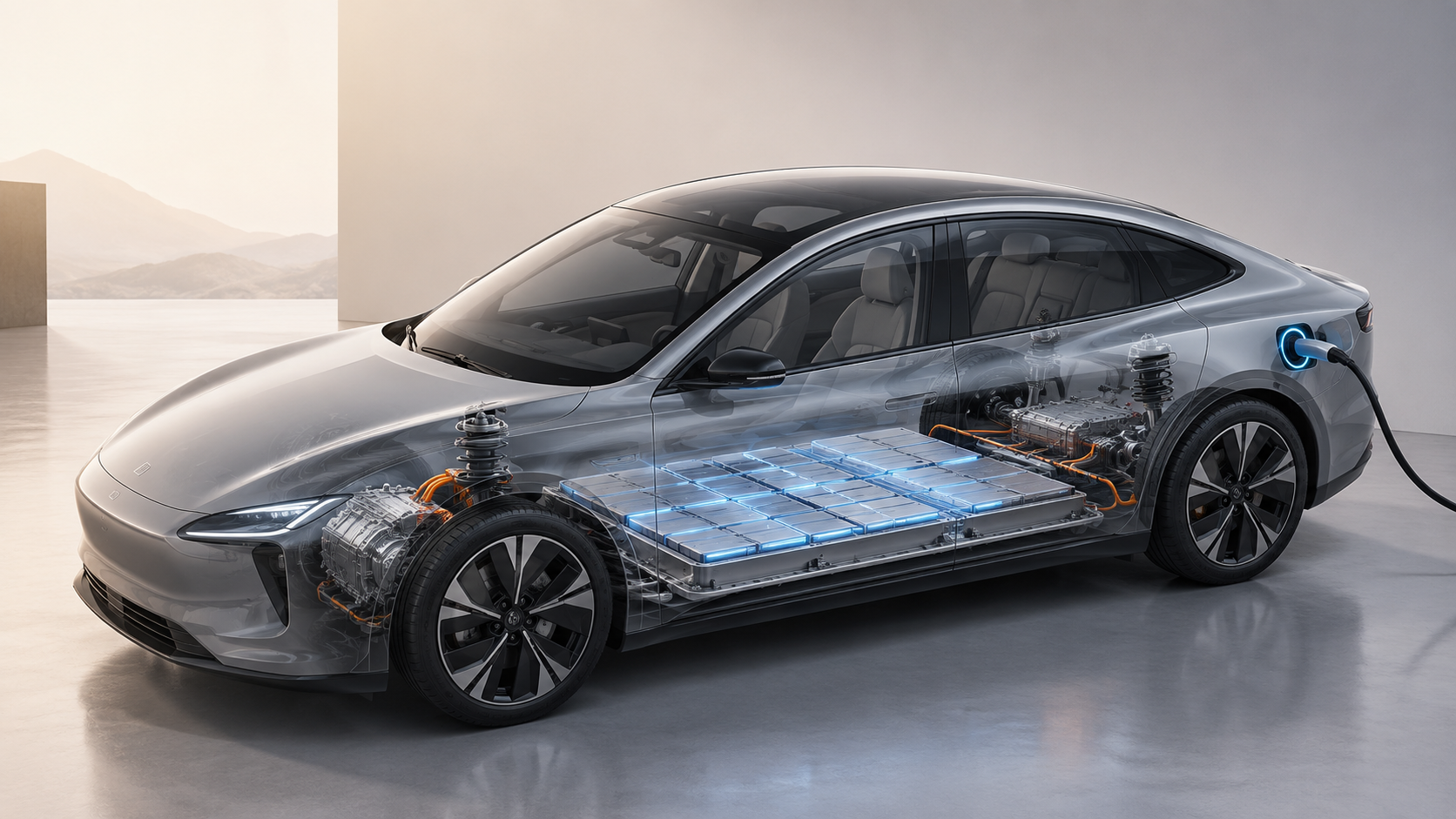
An electric vehicle follows a straightforward energy path:
Charging point → battery pack → power electronics → electric motor → wheels.
The charging point supplies electricity to the vehicle. The battery stores it, the power electronics control how much energy reaches the motor, and the motor turns that electrical energy into movement.
Simple, right?
But What Happens When You Press the Accelerator?
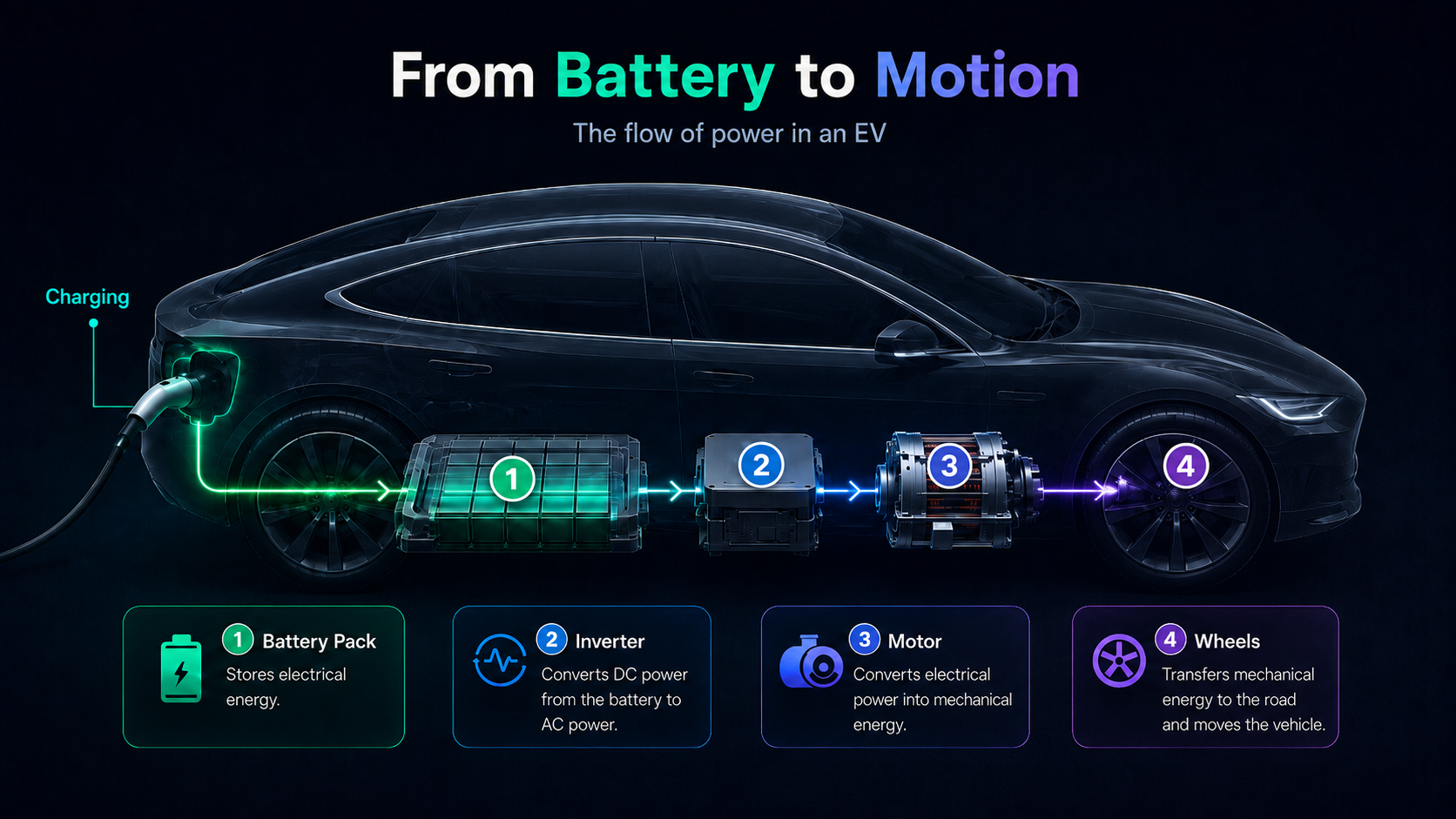
When you press the accelerator in an EV, the pedal sends a signal telling the vehicle how much power you want. The battery then sends electricity to the inverter, which converts the battery’s DC electricity into the type of power required by the motor. The electric motor turns that electrical energy into mechanical movement and transfers it to the wheels. Because the motor responds almost instantly and produces strong torque even at low speeds, an EV can pull away quickly without waiting for an engine to build up speed. Most EVs also use a single-speed gearbox, so the vehicle does not need to move repeatedly through different gears.
This simple flow:- battery, inverter, motor and wheels is what makes an EV feel smooth, quiet and responsive.
The Battery Pack
The traction battery is the main source of energy in an electric vehicle. You can think of it as the EV’s fuel tank, except it stores electricity instead of petrol or diesel. It is not one giant battery cell. Instead, it is made from many smaller cells grouped into modules, which are then combined inside a strong and protected battery pack. In many electric cars, the battery pack is placed underneath the passenger area. Keeping such a heavy component low can improve the vehicle’s balance and stability while driving. Battery capacity is measured in kilowatt-hours, or kWh. A larger kWh figure means the battery can store more energy, but it does not always mean the vehicle will travel farther. Range also depends on the vehicle’s weight, efficiency, shape, tyres, driving speed, weather and air-conditioning use. A lighter and more efficient EV may sometimes travel farther than a heavier vehicle with a larger battery.
The Battery Management System
The battery management system, or BMS, acts like the battery pack’s control centre. It constantly monitors the battery’s temperature, state of charge and the performance of different groups of cells. It also helps protect the battery by preventing it from becoming too hot, overcharged or discharged beyond its safe operating limits. The remaining battery percentage and estimated range shown on the dashboard are calculated using information collected by the BMS and other electronic systems. This is why the estimated range may rise or fall depending on your recent speed, energy use and overall driving conditions.
The Inverter and Power Electronics
An EV battery stores electricity as direct current, or DC, but the motor often needs alternating current, or AC. The inverter converts the battery’s DC power into AC power, while the power electronics controller decides how much energy should be supplied. Press the accelerator gently and the system sends a smaller amount of power. Press harder and more energy flows to the motor for quicker acceleration. The system also controls the reverse flow of electricity when energy is recovered during regenerative braking. Together, the inverter and power electronics form the link between the battery, motor and wheels.
The Electric Motor
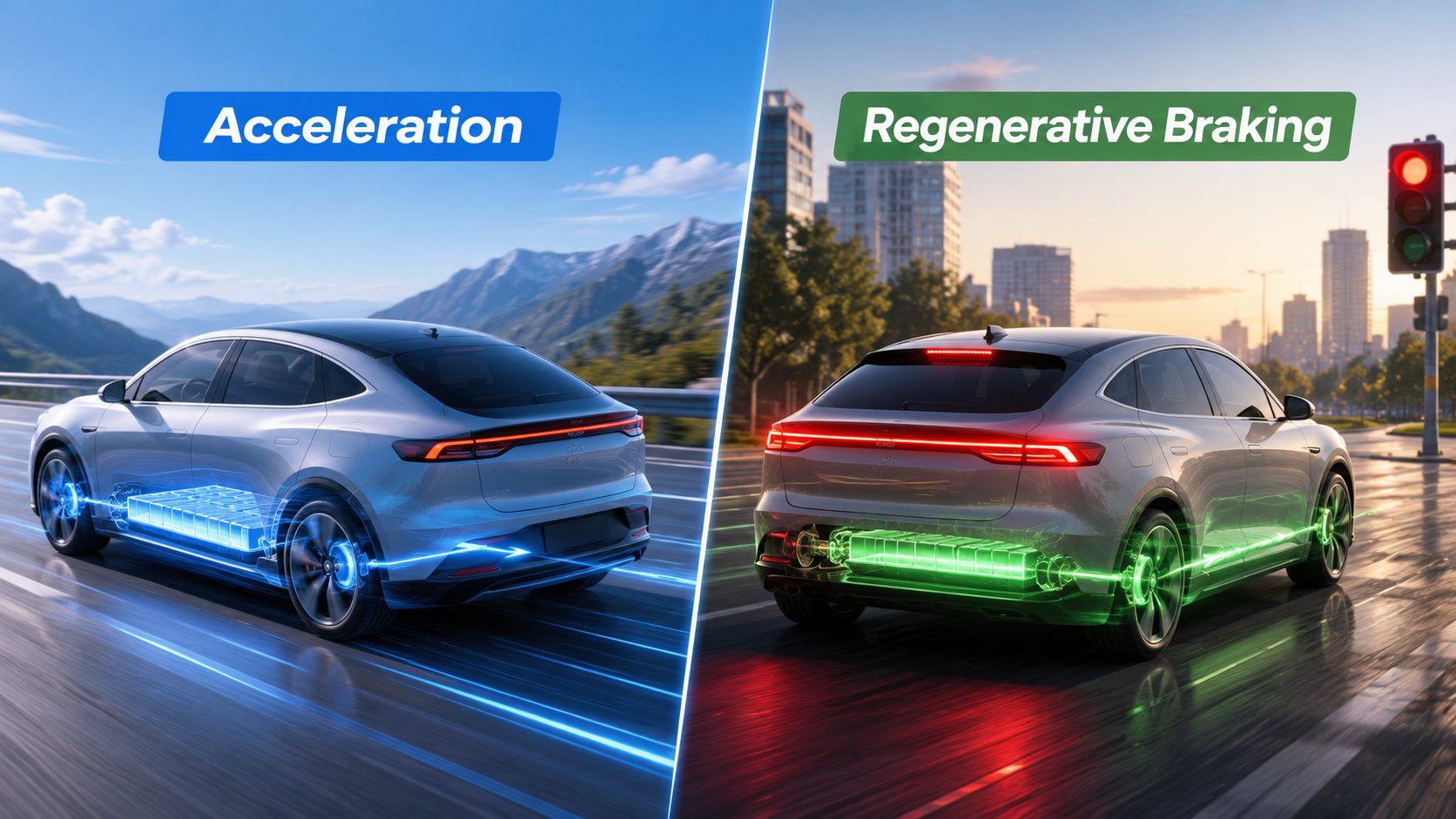
The electric motor turns electrical energy from the battery into movement that spins the wheels. Inside the motor, electricity creates magnetic forces that make a component called the rotor spin. This rotation passes through a gear system before reaching the wheels. Some electric vehicles use one motor, while others use two or more. A dual-motor EV can power the front and rear wheels separately, providing all-wheel drive, stronger grip and quicker acceleration. The motor can also change roles when the vehicle slows down. Instead of only using electricity, it can help recover some of the vehicle’s movement energy. This leads us to regenerative braking.
How Regenerative Braking Works
In a petrol or diesel vehicle, braking mainly relies on friction between the brake pads and discs. This slows the vehicle, but much of its movement energy escapes as heat. An EV can recover some of that otherwise wasted energy. When you lift your foot off the accelerator or press the brake, the moving wheels turn the electric motor. The motor begins acting like a generator and produces electricity, which is sent back towards the battery.
This process also creates resistance, helping the vehicle slow down. Regenerative braking cannot recover all the energy the vehicle has used. Some energy is still lost through heat, electrical resistance and other inefficiencies. EVs therefore continue to use normal friction brakes for sudden stops, emergencies and situations where regenerative braking alone is not strong enough.
Charging, Battery Care and Real-World Range
Charging an EV is similar to charging a phone, only with a much larger battery and far more electricity involved. AC charging is slower and is commonly used at home, at work or anywhere the vehicle remains parked for several hours. The car’s onboard charger converts AC electricity into DC power that the battery can store.
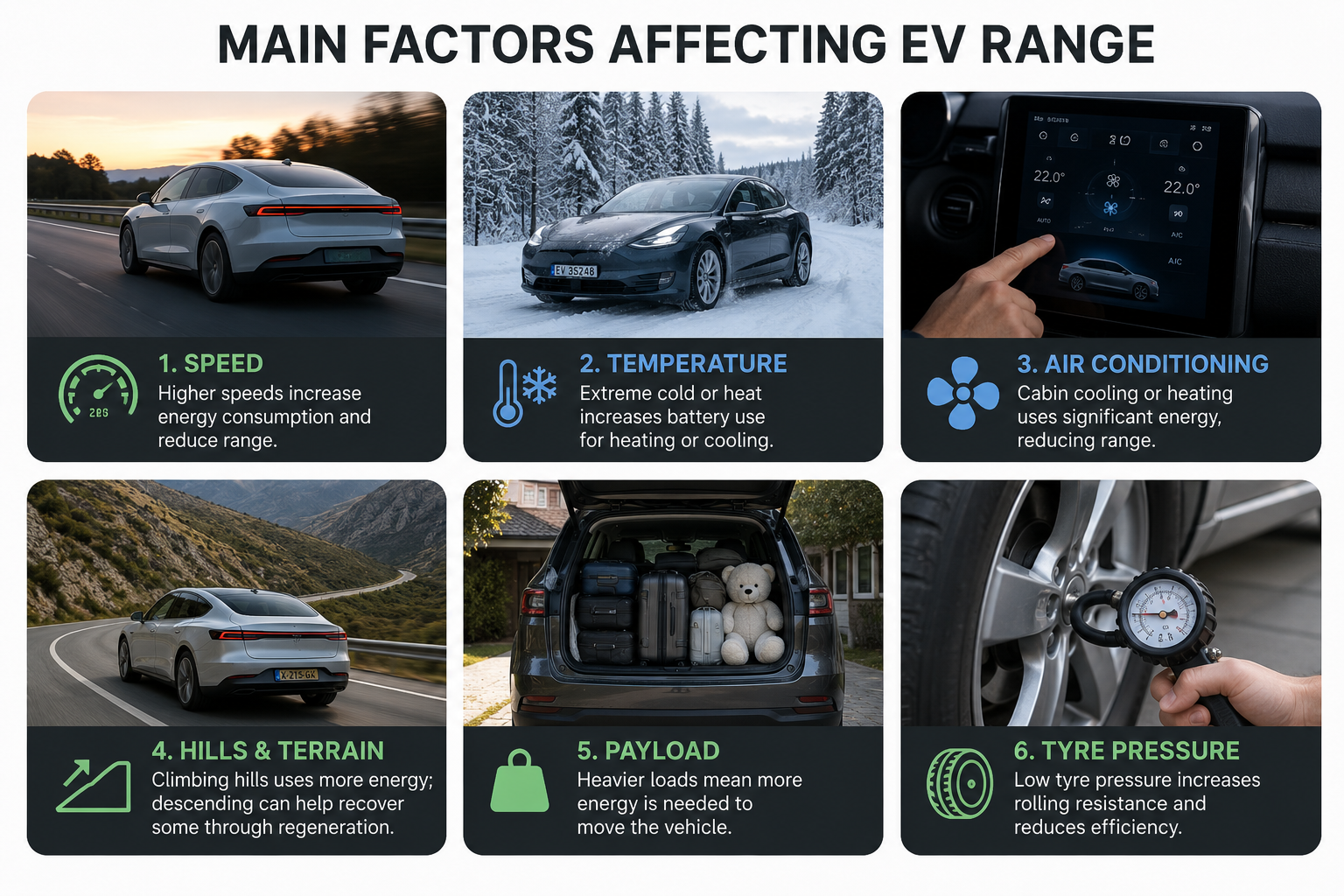
DC fast charging sends DC power more directly to the battery, making it useful during road trips or shorter charging stops.Charging usually slows after around 80% to help control heat and protect the battery. The battery also needs proper temperature control. A thermal management system heats or cools it to support safer charging, stable performance and a longer useful life. Real-world range varies with speed, weather, terrain, tyre pressure, passenger or luggage weight and air-conditioning use.This means the range shown on the dashboard is a useful estimate, not a fixed promise.
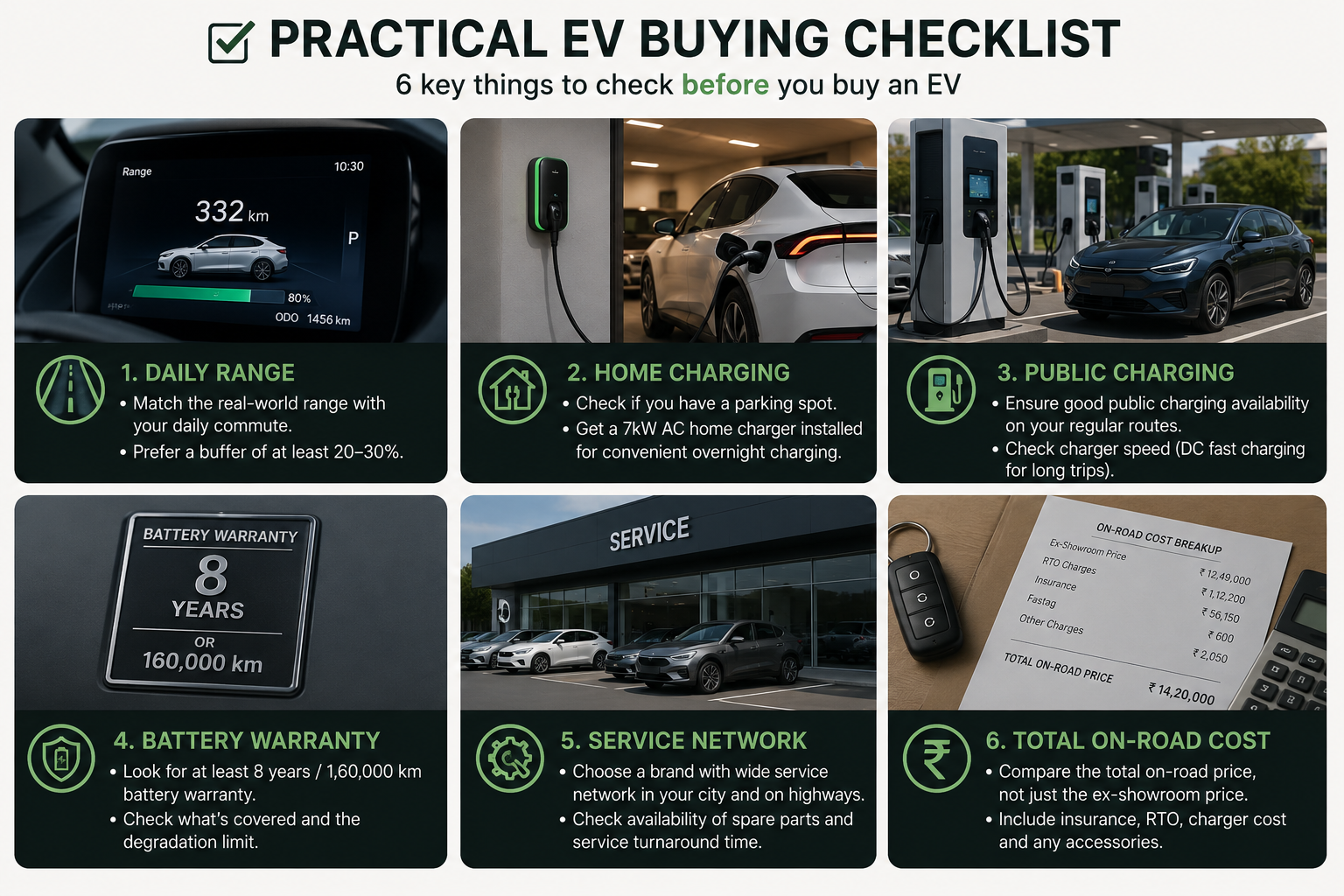
What Should You Check Before Buying an EV?
- Daily range: Match the real-world range with your daily travel and keep a 20–30% buffer.
- Home charging: Check whether you have a suitable parking space and can install a home charger.
- Public charging: Confirm charger availability and charging speed along your regular routes.
- Battery warranty: Check the warranty period, kilometre limit, coverage and battery-degradation terms.
- Service network: Choose a brand with reliable service centres, spare parts and reasonable repair times.
- Total on-road cost: Compare the final price, including insurance, registration, charger installation and accessories.